CABLE TRAYS: AN ESSENTIAL SOLUTION FOR MODERN CONSTRUCTION
Along with the development of the power grid system over the years, cable tray has become an important piece of equipment in construction projects, factories, apartment buildings, and more. Therefore, the cable tray has become a preferred solution chosen by many engineers to save space and optimize investment costs for the project.
Furthermore, it ensures safety and facilitates easy management of electrical wiring, offering many superior advantages compared to other conduits. Let’s learn more about the uses of cable trays in the following article.
1. What is a Cable Tray?
The cable tray is a guiding trough used for the installation of various types of wires and electrical cables in buildings, high-rises, offices, multi-story apartments, manufacturing plants, etc.
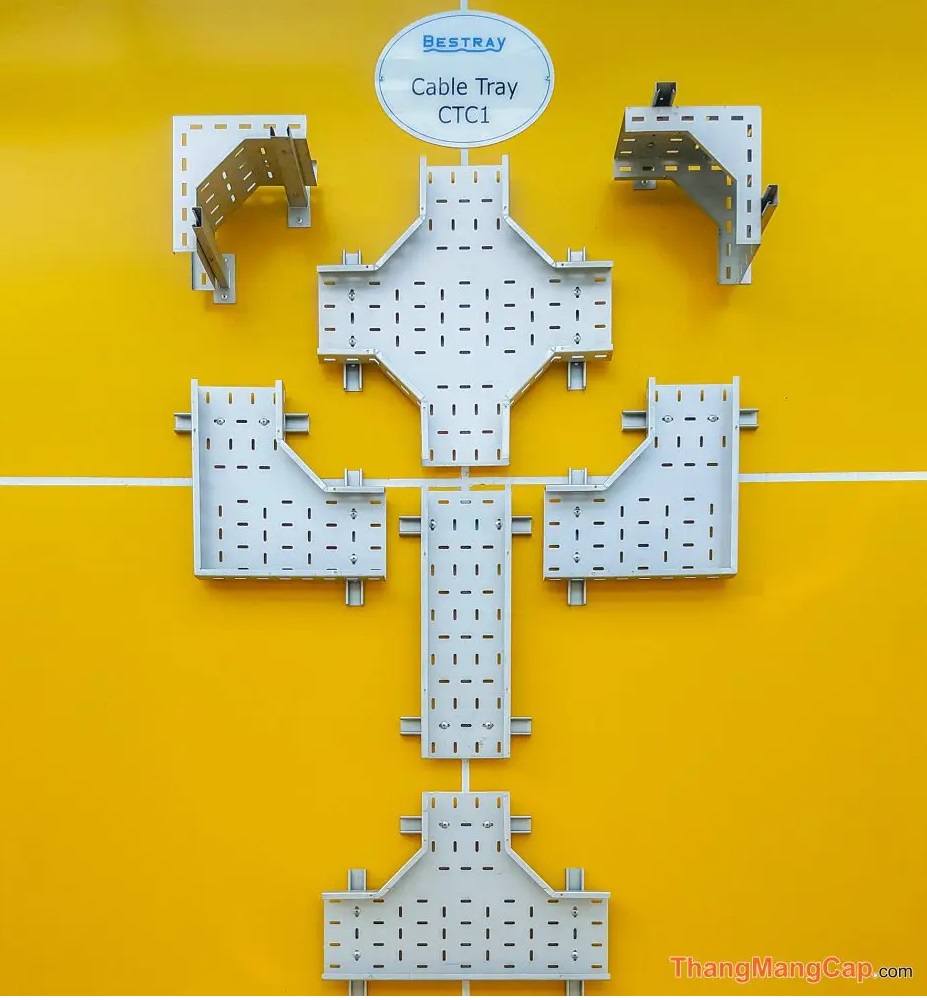
Cable trays are conduits made of aluminum material used to route electrical and network cables in residential and industrial areas. The product comes in two types: perforated (ventilated) and non-perforated (solid bottom).
Cable trays and accessories
2. Why Use Cable Trays?
With the development of residential buildings, manufacturing plants, and high-rise apartments, the demand for cable trays is increasingly widespread. This is because the electrical cable tray system provides safety assurance and effective cable protection for projects.
Cable tray
Currently, most office construction projects, buildings, and apartment complexes use cable tray systems instead of cable conduits (pipes) to ensure safety, save space, and reduce costs. The outstanding features that the product brings include:
- Safety features
- High reliability
- Space saving
- Cost saving
- Material saving
- Maintenance cost saving
- Installation time and cost saving
3. Common Types of Cable Trays
3.1. Aluminum Cable Trays
Aluminum cable trays fall under the category of cable trays, manufactured from high-grade aluminum material and used for routing and installing power lines. Consequently, this product is widely chosen by customers for civil projects. Additionally, this product offers many outstanding advantages in cable tray manufacturing, such as:
- Aluminum is widely used because of its lightweight, making it easy to move and install.
- Aluminum has the ability to resist rust and oxidation in humid air environments.
- The aluminum material has a glossy, smooth surface, enhancing aesthetics.
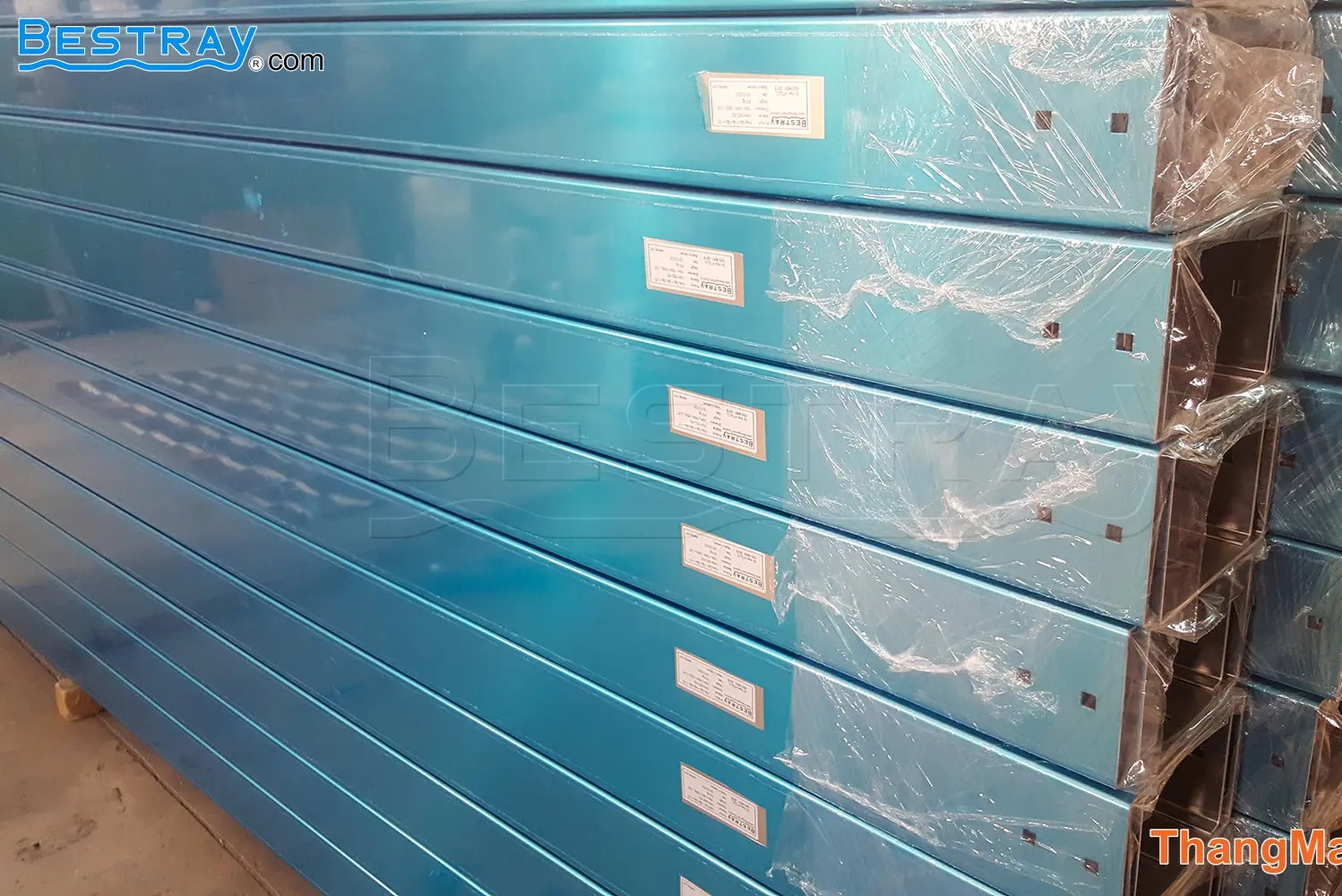
- Aluminum cable trays, with their alloy construction, are coated with an electrostatic (powder) coating to ensure user safety and a long lifespan.
Aluminum cable tray
3.2. Powder-Coated Cable Trays
Powder-coated cable trays are conduits installed to house electrical wires, power cables, and communication cables in buildings and apartments. Furthermore, this type of product is a specialized device that supports electrical cables. It provides insulation and protection, making the project safer and more systematic.
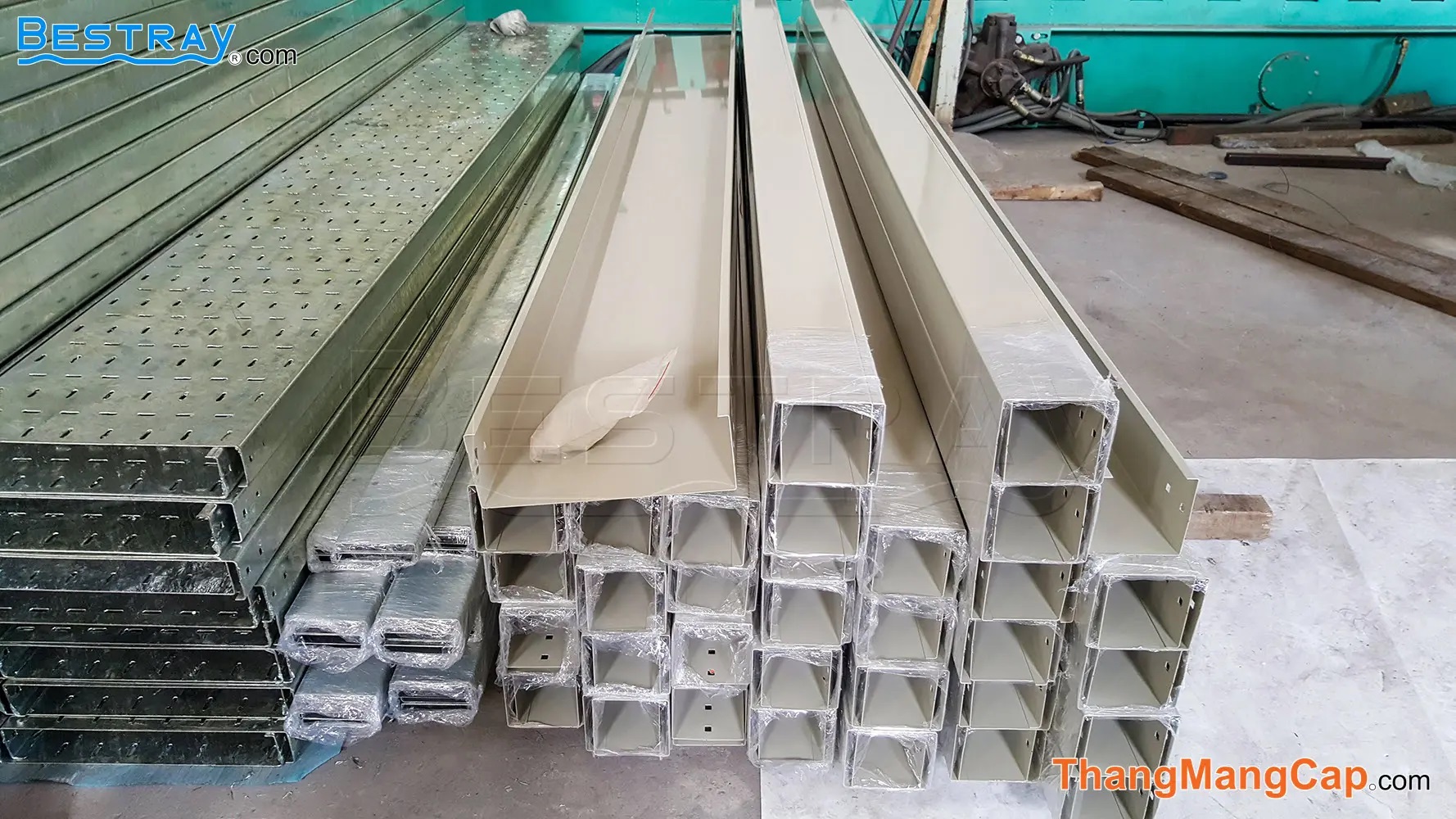
Powder-coated cable
Nowadays, powder coating technology is commonly used and favored by customers due to its low cost, low toxicity during the coating process, high durability, and high aesthetic appeal. The powder-coated cable tray will be finished with an electrostatic layer before being launched onto the market. This electrostatic coating has insulating properties, ensuring maximum safety for users. Moreover, the electrostatic layer resists oxidation, corrosion, and prolongs the product’s lifespan.
3.3. Hot-Dip Galvanized Cable Trays
Hot-dip galvanized cable trays are often widely used in projects exposed to corrosive environments and chemicals. Examples include manufacturing workshops, factories, outdoor cable tray installations, etc.
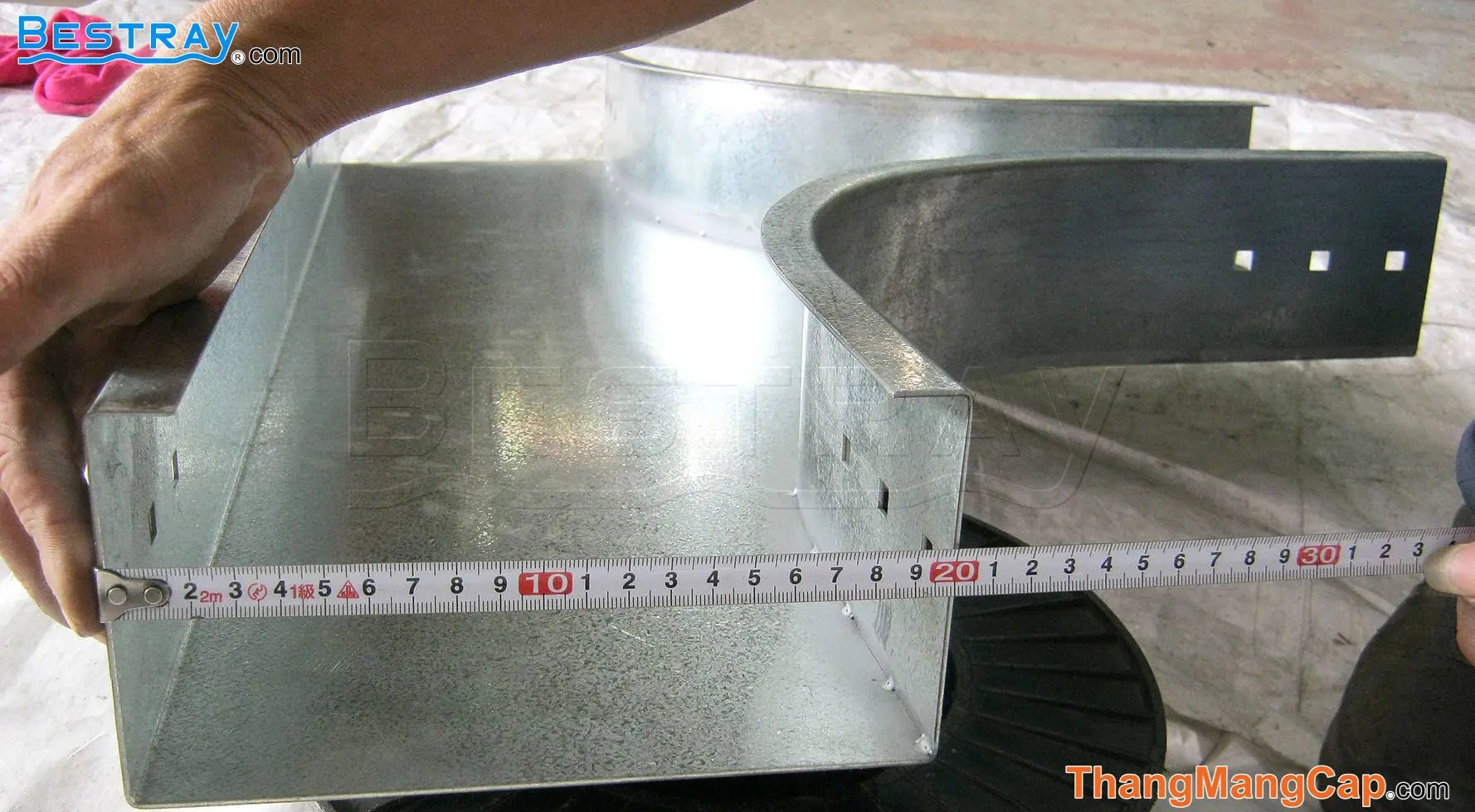
Galvanized cable
Electro-galvanized cable trays (or pre-galvanized) will have a zinc layer coated on the surface to protect the tray from rust, oxidation, and flaking of the paint surface.
Hot-dip galvanized cable trays are typically used for outdoor installations and construction projects in highly corrosive environments. Molten zinc is coated onto the metal surface of the cable tray, creating a durable protective layer. Furthermore, this galvanized layer resists corrosion and rust, protecting against the effects of moisture and direct sunlight from the environment.
3.4. PVC Cable Trays
Plastic cable trays are devices used to support, arrange, and manage project wiring. This type of trunking protects the wires from scratches, jacket tears, and ensures the safety of installation personnel.
The outstanding features of this type include helping the electrical grid system limit damage and scratches, and saving installation time. In addition, the cable tray shape is simple, sturdy, and the light material makes it easy to transport.
3.5. Stainless Steel Cable Trays
Stainless steel cable trays are made from Inox 304, which is rust-resistant, highly durable, has a glossy surface, and is resistant over time. Due to the Inox material, the product can withstand high heat energy and can be used in harsh environments.
Its function is to support and install electrical wiring, power cables, and communication cables, making them neat and easier to manage. Currently, the product is widely used in civil projects across the country.
4. Popular Cable Tray Sizes
4.1. Cable Tray Size 200x100
The 200x100 cable tray (cable tray 200x100, trunking 200x100) is a popular size used in construction projects. This product line often needs to be fixed within utility boxes placed indoors.
Its advantages are its small size, easy transportation, and installation in small areas. Besides, the 200x100 size also has good flexible applicability. The price is reasonable for civil projects and residential areas.
Furthermore, the materials making up this cable tray are usually powder-coated or galvanized steel. When choosing to purchase, buyers need to note the accompanying accessories such as the 200x100 cover, horizontal bend (L), etc.
4.2. Cable Tray Size 300x100
The 300x100 cable tray is also widely chosen and used by many customers. This type of product is often used for installation and construction within the cable tray/ladder system in export processing zones, factories, production workshops, power grid projects, etc.
Installing the 300x100 size helps reduce installation and construction costs for the entire system. Moreover, it allows for quick and convenient installation. The 300x100 tray also creates flexibility between power lines and signal lines, aiming to bring high aesthetic value to the entire project.
4.3. Cable Tray Size 600x100
The 600x100 cable tray is typically used to arrange and manage various types of electrical cables, wires, network cables, etc., for large projects. It helps ensure high safety during every operation. The 600x100 cable tray size also makes supplementing, maintaining, and troubleshooting issues easy and quick, saving time and costs for installation and use.
5. Cable Tray Standards
- North American Standards (NEMA VE1-2017, CSA C22.2 No 126.1)
- European Standard (IEC 61537:2006)
- Vietnam National Standard (TCVN 10688:2015)
6. Cable Tray Manufacturing Process
Step 1: Calculate the dimensions.
Step 2: Select the type of material and the appropriate surface treatment method for the product.
Step 3: Calculate the precise dimensions to cut the product blanks (material).
Step 4: Perform CNC punching/perforating according to the product requirements.
Step 5: Bend and fold the cable tray and shape the product.
Step 6: Cleanse, wash, and treat the cable tray surface.
Step 7: Inspect, package, and deliver to the customer.
BESTRAY CABLE LADDER/TRAY
Address: 180/7A, Tan Thoi 3 Hamlet, Tan Hiep Commune, Hoc Mon District, Ho Chi Minh City, Vietnam
Opening hours: 7:30 AM – 5:00 PM
Phone: +84 909 089 678
Email: info@bestray.com, sales@bestray.com