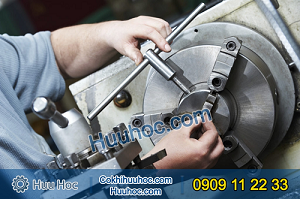
PRECISION CNC MECHANICAL PROCESSING
Currently, with the development of the economy and industry, activities serving human needs are being prioritized more than ever. Especially in the mechanical engineering industry, they provide many practical benefits to human life. So, what is mechanical processing?
☸ What is mechanical processing? Precision CNC processing company in Nha Be District - Ho Chi Minh City
Mechanical processing is a specialized term in the mechanical industry, referring to the entire operation of using machinery, technology, and physical principles to create a finished product with high precision and high applicability to human life.
Along with the continuous development of the mechanical industry in general, processing techniques have made significant leaps forward. Alongside stainless steel processing, aluminum processing, and iron processing, etc., various types of laser and CNC processing machines have emerged, helping humans save time and effort.
Precision mechanical processing is a processing activity that utilizes a system of modern, high-precision equipment and machinery - such as saws, grinders, drill presses, milling machines, etc. - along with high-speed, high-power robots and precise techniques. Precision processing is applied to materials such as glass, graphite, steel, stainless steel, plastic, and more.
☸ Processing technologies in the mechanical industry are divided into the following main categories:
Chipless processing technology: This is a form of deformation processing using pressure, also known as hot processing. In daily life, this form is quite common, such as casting, hot stamping, welding, rolling, drawing, pressing, etc.
Chip-removal processing technology: Includes activities such as cutting, turning, milling, planing, drilling, grinding, etc.
Other processing technology groups: Includes remaining types of processing such as Electrical Discharge Machining (EDM), ultrasonic processing, CNC processing, laser processing, CNC turning, etc.
Traditional processing methods require highly skilled workers however, these methods are very versatile and require lower investment in workshop equipment compared to CNC processing methods. Therefore, for basic and standard product requirements, the product cost is often quite competitive.